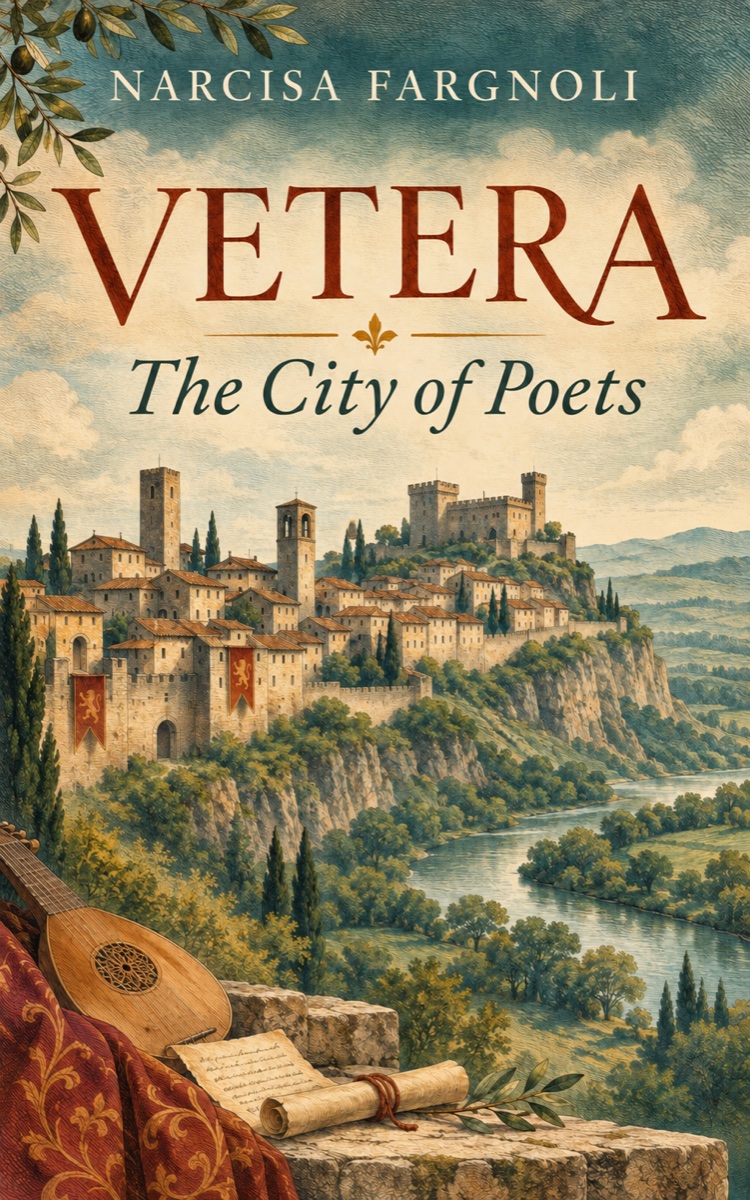
Restoration work at Vetera’s castle uncovers a tomb sealed for centuries. Nora recalls opening the tomb and finding an object that has no place there.
The poet’s tomb! What an exhilarating discovery!
Last year, during the restoration of the castle, in an alcove which had remained sealed for centuries, the sepulchre of the troubadour Raimbaut de Vaqueiras came to light. It was thought that he had died in Thessaly in 1205, fighting alongside his lord, Boniface of Montferrat, but the marble inscription told a different story: the poet, without a shadow of a doubt, died right here, in Vetera, on the 9th of September, 1210.
The construction workers said the partition wall came tumbling down on its own, as if by magic, without anyone touching it. The site manager and architect Manfredi Nicosia called me straight away, telling me to drop whatever I was doing and meet him there. In an empty corridor, at the heart of an immense edifice, we stood before an astonishing sight: a tomb eight centuries old. Hard to fathom that a discovery of this magnitude—the dream of every scholar—had come about purely by chance.
As if that weren’t enough, the coffin also revealed an additional, albeit worthless, object, and one that was decidedly out of place amidst the human remains evoking the quiet dread that death never fails to conjure. No one dared reach in through the bones and the worn shreds of cloth to pick it up. Finally Manfredi stepped up, grabbing it and passing it to me as if it were too hot to touch.
It was a box of ammunition with the words Italian Army, 1940, Year XVIII of the Fascist Era written on it. We looked at each other in a silence heavier than the marble slab we had just removed. If a snake had slithered out of the crypt, we could not have been more stunned.
“Well, well,” Mayor Alvise Fregoli finally intoned. He had insisted on presiding over the opening of the tomb and had to say something on behalf of the governing body he represented. “We could have done without this,” he added. A comment which, however blunt, spoke for everyone present. The past is a shifting tide that can yield occasionally unpleasant things, in this case a skeleton of the 13th century and the vestige of a dictatorship that no one recalls with pleasure.